
Knowledge Evidence
- Certification exam
- Knowledge check
- Written assessment
- Scenario questions
- Coding questions
- Technical concepts
- Terminology
- Systems understanding
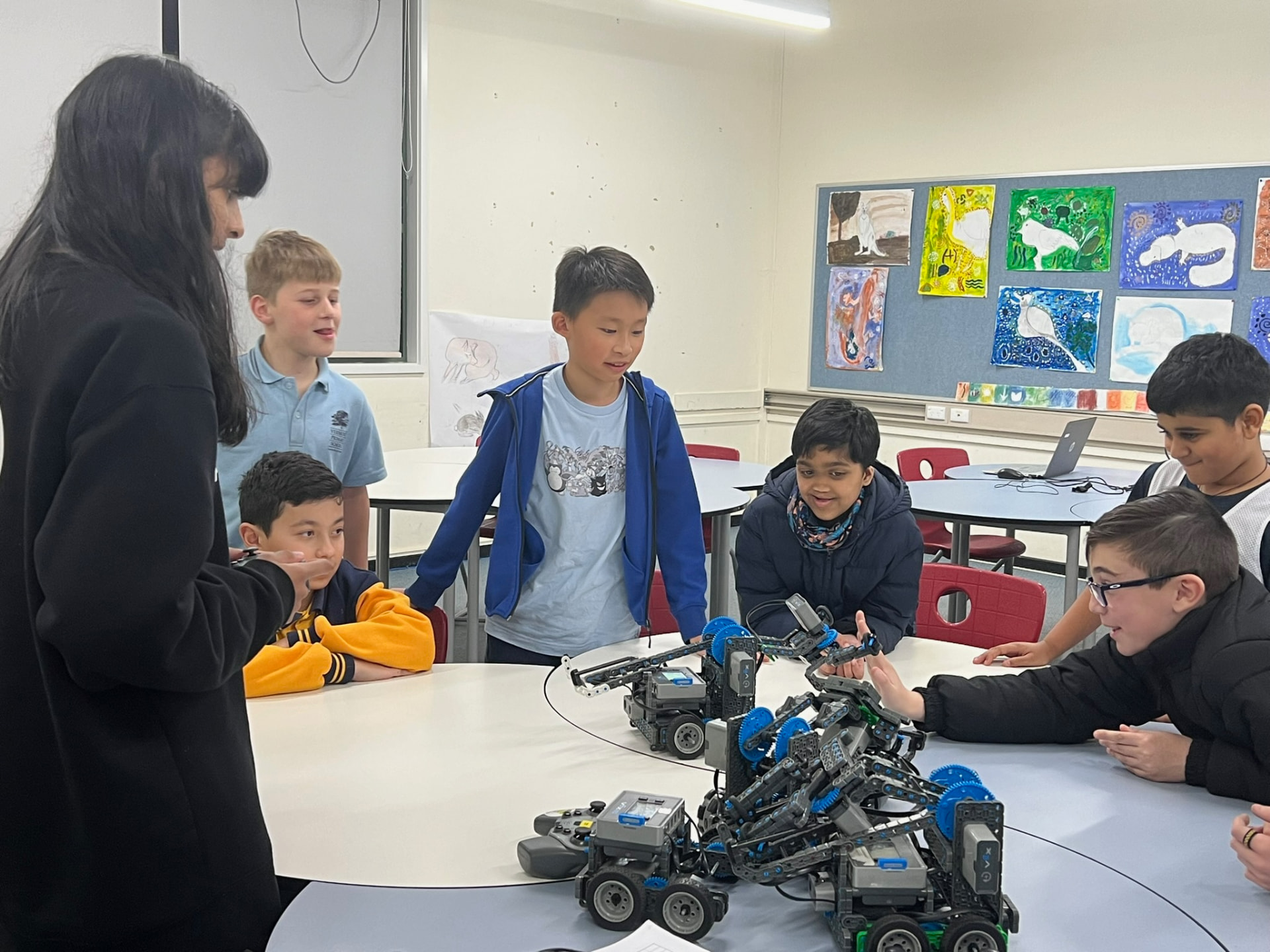
Certification Pathways
Innovate Forge Academy credentials recognise both understanding and application.
Knowledge + Application + Demonstration
For more than a decade, Academy students have had opportunities to extend themselves through structured certification examinations.
As Innovate Forge Academy expands across technology, communication, creativity, leadership, innovation and entrepreneurship, our credential pathways are evolving too.
Knowledge still matters.
But knowing something and being able to apply it are not always the same thing.
Where appropriate, students are therefore challenged to demonstrate their learning through practical projects, performances, presentations, prototypes and real-world-style challenges alongside formal assessment.
Learn. Create. Demonstrate. Achieve.
Forge Academy credentials recognise both what students understand and what they can do.
Develop knowledge and capability through Academy programs.
Complete guided exercises, challenges and practical activities.
Apply learning through a project, performance, prototype or meaningful task.
Explain, present, test or defend what has been created.
Complete the required assessment and demonstrate the defined standard.
LearningApplicationEvidenceRecognition
Knowledge Matters. Application Matters Too.
Structured certification examinations have been an established part of Innovate Academy learning for many years. They provide motivated students with an additional opportunity to:
75%
Minimum pass standard for approved examination-based credentials.
Established exam policies continue to apply:
The examination standard applies to examination-based credentials. Communication, writing, leadership and innovation pathways are assessed through practical evidence suited to the capability.
Two types of evidence
The strongest credentials can combine both.
Credential assessment models
The model is chosen to match how the capability is best demonstrated.
Used where knowledge is the primary evidence.
Examples
Foundation-level technical certification
Evidence
Certification examination — 75% minimum pass standard
Used where students should demonstrate both understanding and application.
Examples
Robotics · Computer Science · Python · Web Development · Advanced Technology · Engineering
Evidence
Knowledge assessment · Practical project or challenge
Example weighting: 40% knowledge / 60% practical — set individually for each credential.
Used when the capability itself must be demonstrated.
Examples
Public Speaking · Communication · Storytelling · Leadership · Creative Writing
Evidence
Project · Portfolio · Speech · Presentation · Performance · Reflection
Used for advanced, cross-disciplinary credentials.
Examples
Future Founder · Future Ready · Advanced Robotics · Young Author · Innovation & Entrepreneurship
Evidence
Substantial project · Portfolio · Presentation · Questions and response · Reflection
What Makes an Academy Credential Meaningful?
Students know what capability they are developing.
Students must show what they can do.
Evidence is reviewed against defined criteria.
Credentials connect to increasingly challenging learning.
Certification should recognise demonstrated capability — not simply time spent in a classroom.
Technology pathways
Knowledge exam + practical
Complete a defined robotics challenge — build, program, test, identify issues and explain what the robot is doing.
Knowledge exam + practical
Complete a more independent robot challenge — select an approach, build, program, test, troubleshoot, modify and explain decisions.
Knowledge exam + practical
Engineering project with an advanced robot, programming, design documentation, testing, iterative improvement and a final demonstration.
Knowledge exam + short coding challenge
Knowledge exam + applied programming task
Knowledge assessment + independent software project + code explanation / review
Students demonstrate:
Pathways across the Academy
Practical endorsements require a working application, website or program the student can explain. Students are never certified merely for using an AI generation tool.
Communication is demonstrated through communication. Speeches are considered for purpose, structure, clarity, audience awareness, delivery and preparation.
Evidence includes team challenges, project responsibility, student-led activity, decision making and response to scenarios.
Recognises the student's writing and development — drafts, revision, editing, response to feedback, final piece and author reflection. Responsible AI requirements preserve student authorship.
The Design Thinking Applied Credential is earned through a highly practical design challenge.
Students present their idea and respond to questions. No real company needs to be launched — recognition is based on demonstrated entrepreneurial thinking.
An interdisciplinary project — a digital solution, innovation, social challenge, robotics project, student venture or creative technology project.
Holiday program certification
Holiday programs combine fun, learning, challenge and demonstration. Not every student needs to sit an exam during a holiday experience — students demonstrate their learning through practical challenges, and recognition depends on the experience selected.
Awarded only where the practical challenge is completed — never simply for walking through the door.
Discover & Design
Identify a problem and create or prototype a solution.
Speak & Lead
Prepare and deliver a short presentation.
Create With Technology
Build or create a functioning digital artefact.
Innovate & Entrepreneur
Develop a solution and pitch its value.
Forge Challenge & Showcase
Complete and present a collaborative challenge.
Students attending multiple days accumulate practical evidence — experiences completed, projects undertaken, capabilities demonstrated and badges earned. More meaningful than a generic attendance certificate.
An Academy-issued Applied Learning Credential — not a nationally recognised qualification, and never awarded on attendance alone. Requirements may include:
Identify and define a challenge.
Communicate and develop the idea.
Build, create or prototype.
Explore value and opportunity.
Complete and present.
Keep fun in the learning
Students experience games, projects, teamwork, creativity, challenges, building and experimentation. The educator gathers evidence naturally through the experience. For younger students especially, assessment should feel like a challenge to complete — not a test to fear. Formal exam pathways remain available where appropriate.
Practical challenges · Demonstrations · Badges · Foundational exams where already established
Knowledge assessment · Projects · Presentations · Portfolios
Independence · Formal exams · Capstones · Portfolios · Technical demonstrations · Questions and defence
Credentials are not assigned solely by age — readiness and pathway requirements guide each step.
My Forge Portfolio
Over time, and where Forge is part of a student's program, students may collect the work behind their recognition. Project evidence is private by default and is never shared publicly without consent.
Credentials that show depth
A credential that shows how it was earned is more credible than a certificate title alone.
Knowledge Matters. Application Matters Too.
Structured certification examinations have been part of Innovate Academy’s learning model for many years. They remain an important option for motivated students who want to deepen their learning and challenge themselves.
The expanded Forge Academy credential model now complements formal examinations with practical demonstrations, projects, performances and portfolios — building on the examination tradition, not replacing it.
The Academy model
Visible across technology, communication, writing, innovation, entrepreneurship, holiday, online, international and school programs.
Learn the capability.
Build confidence through guided challenges.
Apply learning to something meaningful.
Present, test, explain or perform.
Complete the relevant exam, project assessment or performance rubric.
Receive Academy recognition when the required standard is demonstrated.
Progress into the next course, credential or capstone.
Talk with us about where your child's learning could lead next.