
Computational thinking
Decomposition, patterns and algorithms — breaking problems into clear steps.
Applied Computer Science Academy
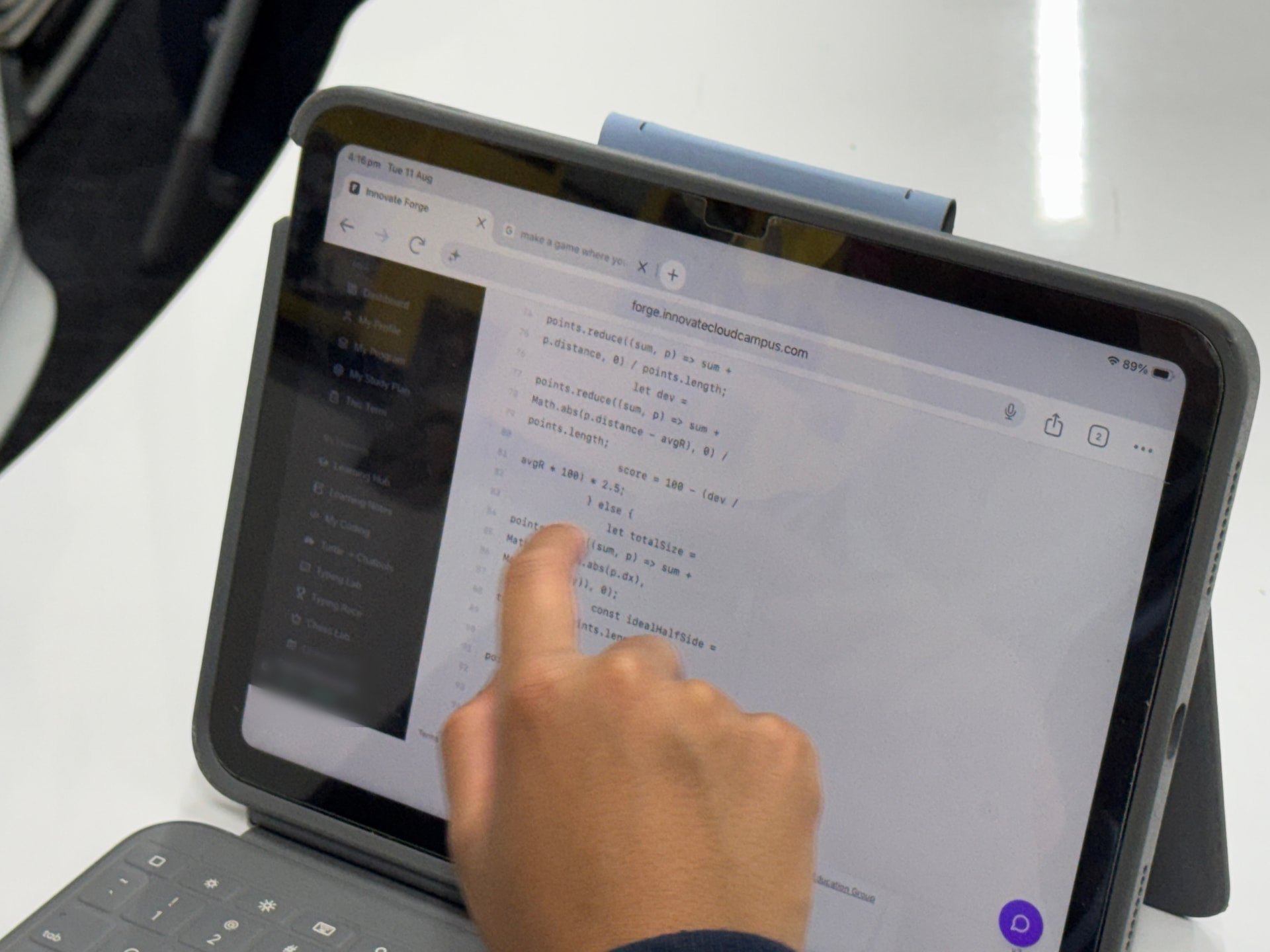
Students develop computational thinking and learn real programming through live, educator-led projects using Python, HTML, CSS and JavaScript. They plan, code, test and improve practical digital creations while building logical reasoning and problem-solving skills.
Program overview
The Applied Computer Science Academy is our established, instructor-led and project-based computer science pathway. Beginners start on the beginner track — no prior coding experience is required.
Students learn to break down problems, plan algorithms, write code, debug and communicate their solutions. Progression happens across multiple terms: students build depth step by step rather than covering every language in a single term.
What students learn
Decomposition, patterns and algorithms — breaking problems into clear steps.
Sequences, variables, loops, conditions, inputs and outputs, and functions as appropriate.
Guided programs and simple applications for problem solving.
Structure and style web pages.
Interactive behaviour, events and responding to user input.
Finding errors, testing ideas and refining solutions.
Age-appropriate foundational AI concepts and responsible technology use — clearly distinguished from the rule-based programming students write.
Explaining how a program works and reflecting on design decisions.
Learning progression
Guided fundamentals of coding logic.
Syntax, logic and debugging.
Purposeful digital projects.
Advanced Python, web and interactive programming as appropriate.
Project examples
Examples vary with level and term; not every project runs every term.
Why families choose this program
Weekly classes · Melbourne time
2027 term dates
$380 per term (8 sessions)
Enrol NowThe Forge Learning App supports practice between sessions with learning resources, project work and reflection, alongside live classes.
Explore the Forge DemoBegin with a friendly, low-pressure Starter Session ($50). It helps your child try the learning and helps us recommend the right pathway.
Book a Starter SessionYour Credential Pathway
This course contributes towards the relevant Academy credential pathway. Students who complete the required learning and demonstrate the assessment standard may become eligible for certification.
Complete the Academy program.
Develop capability through challenges and guided activities.
Complete an applied project or performance.
Complete the relevant practical assessment and/or certification examination.
Earn the relevant Innovate Forge Academy credential when requirements are successfully demonstrated.
Credential opportunity
Assessment
Knowledge Exam + Short Coding Challenge
Demonstrate
Complete a short coding challenge and explain the logic, syntax and debugging decisions behind it.
Next step
Computer Science Certification Level 2
Explore Certification PathwayWe want every student to participate meaningfully. If your child has additional learning needs, contact us before enrolment so we can discuss the program environment and appropriate support.
We can provide invoices and receipts for self-managed or plan-managed NDIS participants. Email us your NDIS plan type after enrolment.
Students can continue into Python, web development and other advanced programming pathways when they are ready. These are guided next steps, not mandatory prerequisites.
Explore the pathwayThe Applied Computer Science Academy builds on the established coding and computational-thinking experience of Innovate Technology & Robotics Academy and now forms part of the broader Innovate Forge Academy learning model.
Parent FAQs
No. Beginners join the beginner track; experienced students enter at an appropriate level.
Python, HTML, CSS and JavaScript, introduced progressively across terms rather than all in one term.
Yes. Python is used for problem solving and simple applications; HTML, CSS and JavaScript are used to build and add interactivity to web pages.
Live and instructor-led via Zoom. Classes are never pre-recorded.
A maximum of eight students per instructor.
Classes are BYOD friendly — students use their own computer with an internet connection for Zoom.
Students move through Discover, Develop, Create and Extend across multiple terms.
$380 per term for eight sessions.
Thursdays, 6:00–7:00pm Melbourne time. Term 1 runs 4 February – 25 March 2027; full term dates are listed above.
Yes. A $50 Starter Session helps new families discover the right pathway before enrolling.
Use the Enrol Now button to go to our enrolment portal.
Curriculum-connected
Applied Computer Science connects with Digital Technologies at school — students learn how algorithms work, then build and debug their own programs.
Australian Curriculum v9
Victorian Curriculum
International references
These connections show how the program complements school learning. They are not accreditation or endorsement by any curriculum authority, and participation does not replace school assessment. Schools can request a program-level mapping summary.
Enrol for 2027 or explore the full Robotics & Computer Science pathway.