AI Literacy for Children: What Do Young People Actually Need to Know?
Artificial intelligence is already part of our children's world. This guide helps parents understand what AI literacy really means and how to equip young people with the critical thinking and creative skills to thrive.
Gary Gopinathan · 16 September 2026 · 7 min read
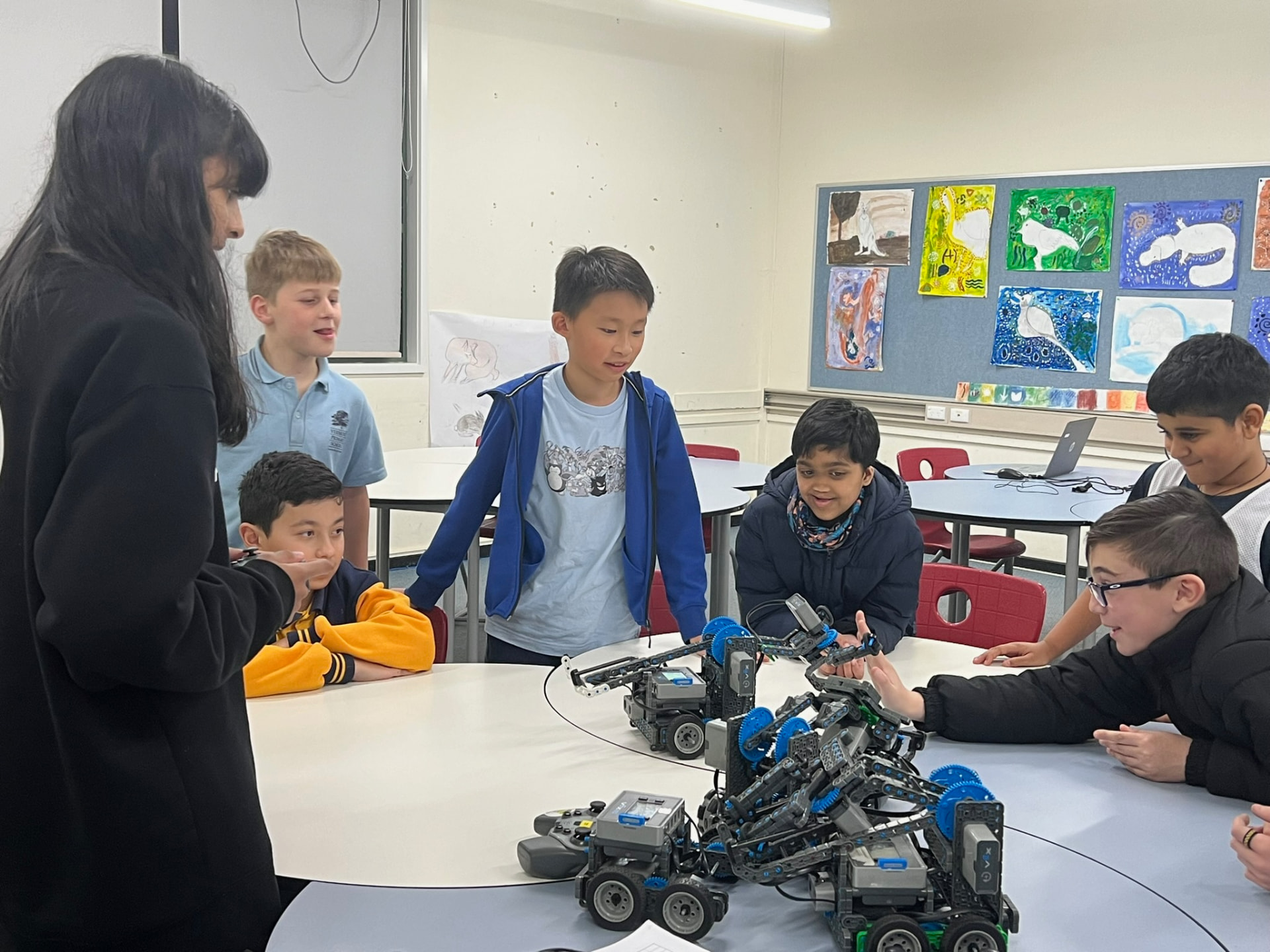
From the YouTube videos it recommends to the smart speaker that plays their favourite songs, artificial intelligence is already woven into the fabric of our children's lives. For parents, the rapid rise of tools like ChatGPT can feel overwhelming, sparking questions about what this technology means for their future.
But rather than a source of anxiety, we can view AI as a powerful new tool—one that requires curiosity, critical thinking, and a guiding human hand. The conversation isn't about letting children fall behind; it's about purposefully leading them forward.
So, what does AI literacy for young people actually look like? It’s less about becoming a machine learning engineer overnight and more about developing a set of durable, human-centric skills. It’s about understanding the technology with a clear-eyed and confident perspective.
First, What Is AI, Really?
Before we can guide our children, we need a simple, practical definition. Forget the sentient robots of science fiction. At its core, most of the AI we encounter today is a type of computer program that has been trained to recognise patterns in vast amounts of data.
Think of it like teaching a child to identify a cat. You don't write a long list of rules ('must have pointy ears, whiskers, a tail...'). Instead, you show them thousands of pictures of cats. Eventually, they learn the 'pattern' of a cat and can recognise one they've never seen before. AI learns in a similar way, but with data—text, images, sounds, and numbers.
This pattern-matching ability is what allows AI to suggest your next movie, translate a sentence, or generate a picture of an 'astronaut riding a horse on the moon'. It's a sophisticated tool, not a conscious mind.
The Essential Skills for an AI-Ready Child
Building AI literacy is about nurturing a specific set of cognitive and ethical muscles. Here are the key areas parents and educators should focus on.
1. Seeing the Whole Picture: What AI Can and Cannot Do
Children need to understand that AI has incredible strengths and significant weaknesses. It can process information at a scale and speed humans cannot, making it brilliant for summarising complex documents or finding answers in a sea of data.
However, it cannot truly understand context, feel emotion, or exercise common sense. It doesn't 'know' things; it predicts the next logical word or pixel based on its training data. It’s a very clever parrot, not a wise owl. Helping your child see both sides of this coin is the first step to critical use.
2. The Art of the Question: Thinking Critically About AI Answers
Because AI is designed to be helpful and confident, its output can seem like absolute fact. This is why critical thinking is arguably the most important component of AI literacy. We must teach children to approach AI-generated content with healthy scepticism.
Encourage them to ask questions like: "Does this answer make sense based on what I already know?" and "Where might the AI have learned this information?" It’s also vital to teach them about 'hallucinations'—a phenomenon where an AI will confidently state incorrect information, essentially making things up to fill a gap in its knowledge.
3. Uncovering the Hidden Biases
AI systems learn from data created by humans, and that data contains all our societal biases, both conscious and unconscious. If an AI is trained on historical texts where doctors are mostly men and nurses are mostly women, its output will reflect and reinforce that stereotype.
This is a fantastic opportunity to have bigger conversations with your child about fairness, representation, and perspective. You can explore this together: ask an image generator to create a 'builder' or a 'scientist' and discuss the results. Why did it create that specific image? What is it leaving out?
4. Becoming a Fact-Checker: The Power of Verification
The temptation to copy and paste a perfectly-written answer from a chatbot for a homework assignment is real. This is why AI literacy must include a strong emphasis on academic integrity and the skill of verification.
Frame it as being a 'digital detective'. The AI can give you a clue or a starting point, but a good detective always confirms their facts with trusted sources. Teach them to cross-reference AI-generated information with a school textbook, a library database, or another reliable website.
5. Your Data is Your Own: A First Look at Privacy
Many AI tools learn from user interactions. It's crucial for children to understand what constitutes personal information and why it must be protected. This is a foundational element of digital citizenship that extends far beyond AI.
Have clear conversations about not sharing their full name, home address, school name, passwords, or family financial information with any online platform, including chatbots. The rule is simple: if you wouldn't say it to a stranger on the street, don't type it into a chatbot.
6. Using AI for Good: Responsibility and Ethics
Beyond understanding how AI works, young people need to think about how it *should* be used. This involves discussions on ethics: using AI as a tool to help you learn, not as a shortcut to cheat. It means talking about why we shouldn't use AI to create fake images of people or to spread misinformation.
These conversations help build a strong moral compass that will guide them as technology continues to evolve, empowering them to be responsible creators, not just passive consumers.
7. Sparking New Ideas: AI as a Creative Co-pilot
Finally, it's vital to show children that AI is not just a series of risks to be managed, but an incredible tool for creativity. The human is the artist; AI is a new kind of paintbrush.
Encourage them to use AI as a brainstorming partner for a story, a collaborator to generate concept art for a school project, or a muse to suggest chord progressions for a song. This teaches them that technology is at its best when it augments human ingenuity. The user provides the vision, the taste, and the critical judgment—the very skills that make us human.
How Parents Can Nurture AI Literacy at Home
Building these skills doesn't require a formal curriculum. It can start with small, consistent actions at home.
- Explore Together: Sit with your child and use a kid-friendly AI tool. Generate some images or ask it questions. Talk about what you see, what surprises you, and what seems a bit 'off'.
- Ask Curious Questions: When Netflix recommends a show, ask, "Why do you think the computer suggested that for us?" This plants the seed of thinking about the algorithms that shape their digital world.
- Model Good Habits: When you look up information online, talk through your process. "I read that here, but I'm going to check one more source to be sure." This normalises verification.
- Set Clear Boundaries: Just as with screen time or social media, establish family rules for how and when AI tools can be used, especially for schoolwork.
Preparing for Tomorrow, Today
Ultimately, AI literacy is about empowerment. It's about shifting the focus from the technology itself to the human capabilities needed to wield it with purpose: critical thinking, creativity, and ethical leadership. Our goal is not to train children to serve the technology, but to teach them how to make the technology serve human goals.
This philosophy is at the centre of our approach at Innovate Forge Academy. We believe in putting human capabilities first. In our Technology & AI programs, young people don't just learn about tools; they develop the skills to analyse, question, create, and lead in a world shaped by them. They learn to be the driver, not the passenger.
If you're curious about how to build these essential skills in a supportive, engaging environment, we invite you to book a complimentary 15-minute Parent Discovery Session. Let's talk about how we can help your child learn to discover, create, and lead.
Interested in where this could lead for your child?
Explore Technology ProgramsGary Gopinathan
Founder, Innovate Forge Academy
Gary Gopinathan is an educator, entrepreneur, leadership coach and founder of Innovate Forge Academy. With more than 25 years of experience in education, technology and capability development, he explores how young people can develop confidence, creativity, leadership and future-ready skills.