Coaching-led development
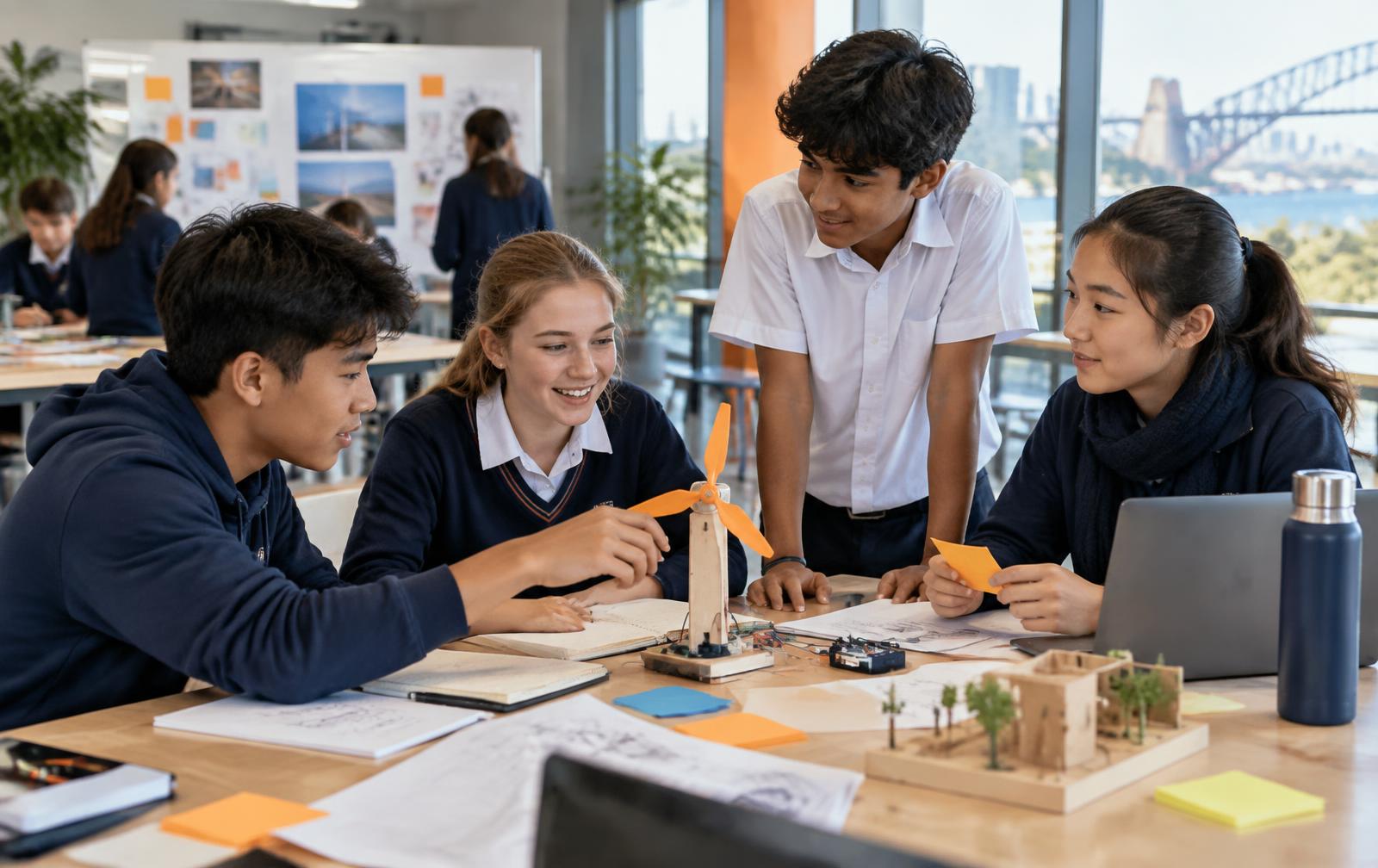
Personalised guidance helps students discover strengths, set goals and take ownership of learning.
Innovation, Leadership & Entrepreneurship
Discover your strengths. Navigate change. Shape your future. Build adaptable skills for changing study, work and community contexts.
Programme description
Future Readiness is a practical, coaching-led programme that helps young people develop the adaptability, confidence and self-direction needed to navigate changing learning, work and community environments.
As technology, opportunities and expectations evolve, students benefit from developing capabilities they can apply across different situations rather than preparing for only one predetermined pathway.
Through guided activities, collaborative challenges, personal reflection and practical projects, students explore their strengths, interests and values. They learn to approach unfamiliar situations, develop strategies for continuous learning, communicate effectively, collaborate with others and make thoughtful decisions.
The programme introduces students to important future-ready capabilities, including critical thinking, digital and AI literacy, adaptability, personal agency, problem-solving and responsible decision-making. Students explore how different learning experiences, interests and skills may connect to further study, employment, entrepreneurship and community participation.
Rather than predicting which careers will exist or telling students what they should become, educators encourage students to investigate possibilities, evaluate information and make decisions that reflect their individual circumstances and goals.
The programme combines coaching, mentoring and practical challenges to help students develop a clearer understanding of their capabilities and identify appropriate next steps. Learning activities are adapted to age and experience.
Younger students may focus on strengths, learning habits, teamwork and exploring opportunities. Older students may investigate study pathways, career possibilities, emerging technologies, independent learning and personal development planning.
Students complete the programme by developing a personal Future Readiness Portfolio and presenting an individual development plan.
The objective is to develop capability, agency and informed decision-making, rather than guarantee employment, academic achievement or a particular career outcome.
What students will learn
The Forge difference
A proposed coaching-led programme for practical capability, reflection and thoughtful next steps.
Personalised guidance helps students discover strengths, set goals and take ownership of learning.
Students explore capabilities they can apply across study, work and everyday life.
Practical challenges encourage students to explore unfamiliar situations and develop thoughtful responses.
Students learn to approach digital tools and AI with curiosity, critical thinking and appropriate judgement.
Learning experiences are adapted to students’ ages, interests and previous experience.
Students work towards a meaningful portfolio and an actionable development plan.
Curriculum
Each area is developed through guided explanation, practical work, testing and reflection.
Students explore their interests, strengths, learning preferences and values and how these may influence decisions and development.
Students explore how to approach unfamiliar challenges, learn new skills and respond constructively when circumstances change.
Students practise evaluating information, considering alternatives, identifying assumptions and making reasoned decisions.
Students explore digital technologies and AI through age-appropriate awareness of responsible use, privacy, verification and human oversight.
Students practise communicating ideas, listening, working with others and contributing to shared goals.
Students investigate learning and future pathways, establish development goals and identify practical next steps.
Proposed eight-session curriculum
This introductory term sequence is proposed and pending founder curriculum approval.
Students use personal-strengths reflection, interest mapping, small-group discussion and individual development goals to create My Strengths & Interests Map. Informal strengths exercises are not psychological assessments.
Students explore learning strategies, try an unfamiliar skill, use feedback and reflection, and develop My Learning Toolkit.
Students work through problem-solving scenarios, distinguish evidence from opinion, identify assumptions and make collaborative decisions, producing a completed challenge with written reasoning.
Through approved, age-appropriate demonstrations, students examine AI applications, limitations, errors, verification, privacy and human oversight, then create My Responsible Technology Checklist. No unapproved AI account is required.
Students practise collaborative problem-solving, team communication, listening, questioning, responsibility and initiative, producing a Team Challenge Reflection.
Students explore education, career fields, entrepreneurship and community contribution using reliable, current information, then create My Future Possibilities Map. No occupation or employment outcome is predicted.
Students review strengths, identify priorities, set achievable goals, plan actions and identify sources of support, producing My Future Readiness Action Plan.
Students review their portfolio, prepare a short presentation, reflect, receive appropriate educator feedback and identify future learning opportunities. Alternative ways to share work are available where appropriate.
Proposed age-appropriate delivery
Both tracks follow the same eight-session structure, with activity and project complexity adapted to learners. They do not create separate scheduled classes; age groupings require approval before enrolments open.
Capstone student project
A practical record of reflection and learning—not a prediction of a student’s future. Students retain appropriate control over personal reflections; portfolios and identifiable information are not displayed publicly without appropriate permission.
A reflection on personal interests, capabilities and areas of curiosity.
Strategies for developing new skills and approaching unfamiliar challenges.
Evidence of a practical activity requiring critical thinking and decision-making.
Personal principles for appropriate digital and AI use.
A reflection on communication, teamwork and initiative.
An exploration of different learning, work or community opportunities.
Two or three achievable personal development goals and appropriate next steps.
A short written or spoken explanation of learning and possible next interests.
Core skills and outcomes
Proposed Growth & Care approach
Coaching can use guided questions, encouragement, practice and reflection to help students explore capabilities and goals; appropriate educators may provide guidance on learning opportunities and possible pathways; and pastoral care centres an inclusive, respectful and child-safe environment. This is not psychological counselling, career assessment or mental-health treatment, and an individual mentor is not promised.
The exact coaching, mentoring and pastoral-care practices included are confirmed for each program. An individually assigned mentor is not promised.
Explore our learning approachResponsible guidance
Future Readiness develops broad adaptability, learning and decision-making capability. It is distinct from Future Founders, which focuses on developing and pitching an entrepreneurial concept.
The course is not psychological counselling, career assessment or mental-health treatment. It does not promise individual mentoring, employment, academic results, confidence improvements or a particular career outcome.
Students are not required to disclose sensitive personal, family, financial or wellbeing information. Educators use approved technology and current, reliable pathway information with appropriate privacy, verification and human oversight.
Forge Learning App
Relevant approved Forge Learning App functionality may support guided learning activities, personal learning goals, project submissions, progress reflections, learning resources, portfolio development and educator feedback. Access and available functions are confirmed for each approved intake. This course does not create sensitive student profiles, psychological assessments or private wellbeing records.
Complementary learning opportunities
These connections are suggestions, not prerequisites. Future Readiness remains distinct from Future Founders and may also complement communication, innovation, entrepreneurship, responsible AI learning and senior secondary support.
Explore one-to-one support for approved VCE subjects, study planning and student-owned preparation. It does not replace school teaching or assessment.
Explore VCE supportAsk about age-appropriate responsible AI learning. This is not currently presented as a separate approved course or confirmed intake.
Relevant approved Forge Learning App functionality may support guided learning activities, personal learning goals, project submissions, progress reflections, learning resources, portfolio development and educator feedback. Access and available functions are confirmed for each approved intake. This course does not create sensitive student profiles, psychological assessments or private wellbeing records.
No Future Readiness session is currently confirmed. Register your interest for approved dates, locations, age groupings and delivery details.
View proposed Term 1 catalogueFees, available places and enrolment arrangements have not been approved. Register your interest to receive confirmed information.
Register Your InterestFrequently asked
It means developing adaptable capabilities that can support learning, work and community participation across changing contexts—not predicting one fixed future.
It is proposed for Years 7–12, with activities adapted to age, interests and experience. This range and the actual groupings require approval before enrolments open.
No. Beginners are welcome, and guidance is matched to the learner’s age, interests and experience.
This is an educational capability programme, not career assessment or counselling. Students explore possibilities and decision-making without being told what they should become.
The proposed curriculum includes age-appropriate AI awareness, limitations, verification, privacy, responsible use and human oversight. It does not require an account on an unapproved AI service.
Students practise learning strategies, unfamiliar challenges, reflection, feedback, critical thinking and achievable goal setting. Individual improvements are not guaranteed.
It is a practical collection of maps, checklists, challenge evidence, reflections and an action plan. It records learning rather than predicting a student’s future.
Yes. The proposed Explorers and Pathfinders tracks use the same eight-session journey with different complexity. They do not automatically create separate scheduled classes.
Appropriate educators may provide guidance within an approved course, but an individually assigned mentor or formal personal-development service is not promised.
Future Readiness develops broad adaptability, learning and decision-making capabilities. Future Founders is distinct and focuses on developing and pitching an entrepreneurial concept.
Young Leaders, Entrepreneurship, Future Founders, Design Thinking, communication courses, responsible AI learning and VCE Coaching & Mentoring may be complementary. None is mandatory, and availability is confirmed by enquiry.
No date, time, venue, trainer, capacity or commencement date is confirmed on this page. Register your interest to receive approved details.
Related courses
These are suggested routes, not mandatory prerequisites. Existing experience can support a different entry point.
Innovation, Leadership & Entrepreneurship
Practise initiative, teamwork and values-led leadership.
Years 3–8
$220 per term · 8 sessions · 60 min
Innovation, Leadership & Entrepreneurship
Explore how ideas become useful, sustainable ventures.
Years 6–10. The suggested year range is provisional and requires curriculum approval. Beginners welcome. Guidance is matched to learner age and experience.
Explore programInnovation, Leadership & Entrepreneurship
Develop a concept, understand its audience and deliver a persuasive pitch.
Years 7–9 for the existing curriculum specification. This guidance requires curriculum approval. Developing entrepreneurial learners. Guidance is matched to learner age and experience.
Explore programInnovation, Leadership & Entrepreneurship
Understand people, define challenges and prototype thoughtful solutions.
Years 3–9. The suggested year range is provisional and requires curriculum approval. Beginners welcome. Guidance is matched to learner age and experience.
Explore program
Communication & Leadership
Learn structure, voice and presence in a supportive environment.
Years 3–8. Guidance is matched to learner age and experience. Beginner to developing.
Explore programCommunication & Leadership
Plan and deliver clear, engaging presentations.
Years 5–12. Guidance is matched to learner age and experience. Beginner to advanced.
Explore programDraft review notes
Tell us what your learner is curious about and we’ll help identify an appropriate next step.