Coaching-led learning
Guided questions, encouragement and feedback help students develop their own ideas.
Educators support independent thinking rather than simply providing ready-made solutions.
Innovation, Leadership & Entrepreneurship
Understand people. Reimagine possibilities. Understand people, define challenges and prototype thoughtful solutions.
Programme description
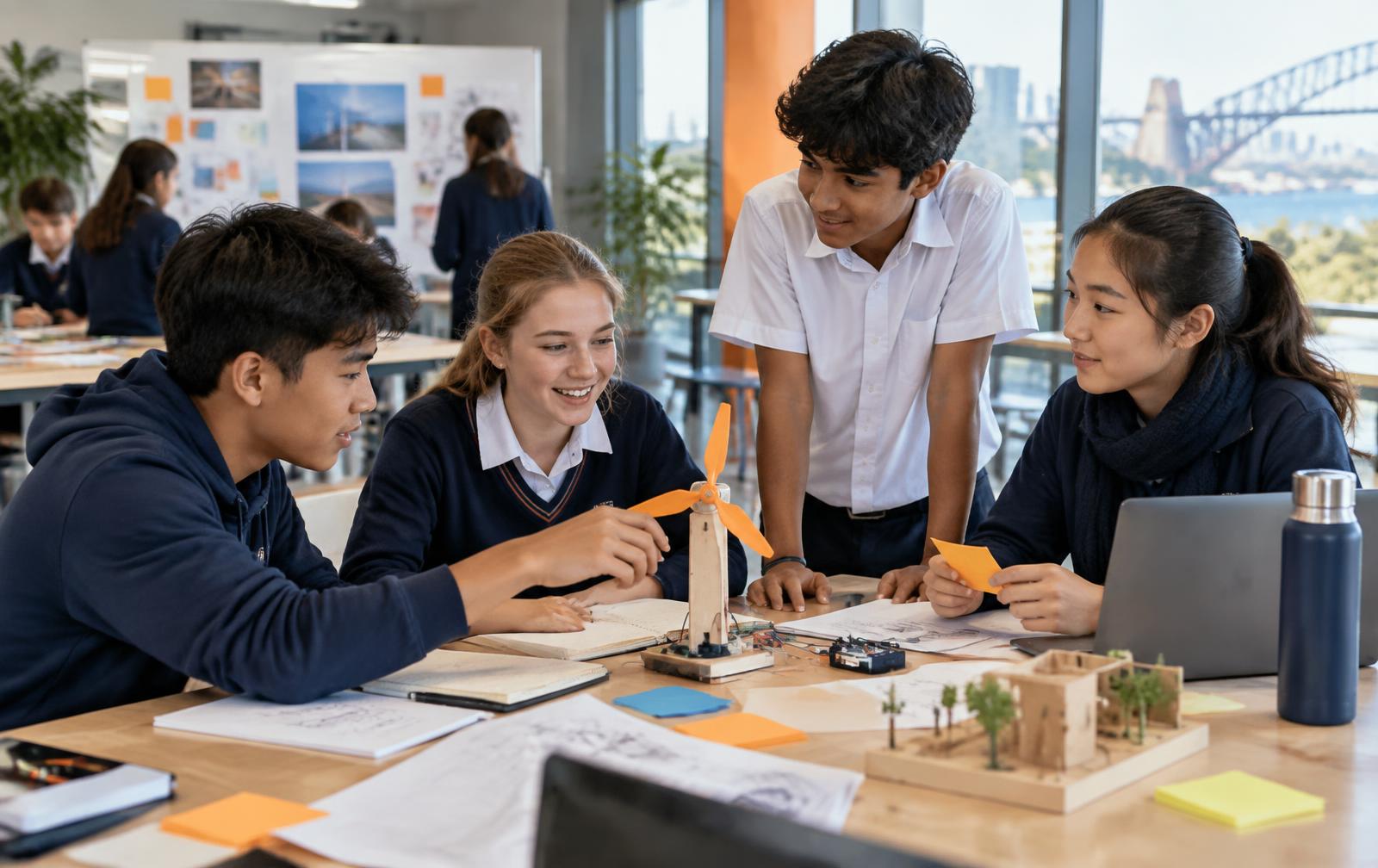
Design Thinking introduces students to a creative and human-centred approach to understanding problems and developing thoughtful solutions.
Students learn that meaningful innovation begins with curiosity, observation and understanding the experiences of others.
Through age-appropriate challenges, collaborative activities and guided experimentation, they explore how to identify needs, define problems, generate ideas and develop simple prototypes.
Rather than immediately jumping to solutions, students are encouraged to ask questions, listen carefully, consider different perspectives and explore what makes a problem worth solving.
The programme introduces students to practical design-thinking processes through activities such as observation, interviews, brainstorming, sketching, model-making and testing.
Students discover that their first idea is not necessarily their final solution. They learn how feedback, reflection and iteration can help improve a design.
Educators provide coaching and constructive guidance while encouraging students to develop their own ideas and take responsibility for their decisions.
The programme supports students who enjoy creative challenges, making things, collaboration and exploring how everyday experiences could be improved. Activities are adapted to different ages, interests and experience levels.
What students will learn
The Forge difference
From curiosity to contribution—students develop ideas through guided inquiry, practical projects, feedback and reflection.
Guided questions, encouragement and feedback help students develop their own ideas.
Educators support independent thinking rather than simply providing ready-made solutions.
Students investigate meaningful challenges and explore practical ways to address them.
Learning connects to everyday experiences, communities and potential user needs.
Students generate ideas, experiment with solutions and learn through iteration.
Unsuccessful experiments can become useful sources of feedback and learning.
Collaborative challenges create opportunities to practise communication, initiative and responsibility.
Students may contribute through different strengths, personalities and roles.
Learning challenges are matched to students' age, interests and experience.
Younger learners may use guided activities while experienced learners tackle more complex projects.
Students work towards tangible projects that demonstrate their ideas and learning.
Projects may include prototypes, invention models, leadership projects, venture concepts and pitches; commercial outcomes are not promised.
Proposed innovation inquiry cycle
This course-specific inquiry cycle connects curiosity, human-centred observation, creative problem-solving, practical application and reflection. The academy-wide Explore · Build · Apply · Master progression remains authoritative.
Curriculum
Each area is developed through guided explanation, practical work, testing and reflection.
Understanding people and identifying their needs.
Observing situations and defining meaningful challenges.
Generating and exploring different ideas.
Developing simple models and prototypes.
Testing ideas and responding to feedback.
Communicating design decisions and reflecting on improvements.
Proposed eight-session curriculum
This introductory term sequence is proposed and pending founder curriculum approval.
Students explore how design can improve everyday experiences and participate in a simple creative problem-solving challenge.
Students practise observing, listening and asking appropriate questions. They explore how different people may experience the same situation differently.
Students identify a specific problem or opportunity and develop a clear, age-appropriate problem statement.
Students use brainstorming, sketching and idea-generation techniques to explore alternative solutions.
Students compare possible solutions using criteria such as usefulness, practicality and user needs, then select an idea to develop.
Students create a physical, visual or digital representation of their proposed solution.
Students gather appropriate feedback, evaluate their prototype and make improvements.
Students present their challenge, design process, prototype and learning reflection.
Student project
Students select an age-appropriate challenge connected to school, home, community or everyday life—such as an organisation system, accessible classroom resource, common school problem or everyday object. They create a problem statement, summary of user needs, several possible ideas, a prototype, a record of feedback and improvements, and a final presentation. Proposed solutions are not represented as implemented in real organisations.
Core skills and outcomes
Proposed Growth & Care approach
Coaching uses questions and feedback to support human-centred inquiry and independent design decisions; appropriate mentoring can encourage curiosity; and pastoral care supports respectful listening without requiring personal disclosure.
The exact coaching, mentoring and pastoral-care practices included are confirmed for each program. An individually assigned mentor is not promised.
Explore our learning approachResponsible entrepreneurship
These courses develop thinking, communication and project capability. They do not promise profitable ventures, investment, guaranteed leadership outcomes or implemented solutions.
Forge Learning App
Where included in an approved intake, Forge may support problem statements, design journals, project reflections. These are potential course supports until implemented access is confirmed. No new module, student record, authentication or AI capability is created by this website update.
Suggested learning journey
This journey is flexible, not a mandatory prerequisite chain. Students may enter at an appropriate point based on age, interests and experience.
Young Leaders supports teamwork, initiative and responsible leadership across the journey. It is not a mandatory prerequisite.
Explore Young LeadersWhere included in an approved intake, Forge may support problem statements, design journals, project reflections. These are potential course supports until implemented access is confirmed. No new module, student record, authentication or AI capability is created by this website update.
No Design Thinking session is currently confirmed. Register your interest for approved dates, locations and delivery details.
View proposed Term 1 catalogueFees, available places and enrolment arrangements have not been approved. Register your interest to receive confirmed information.
Register Your InterestFrequently asked
Years 3–9. The suggested year range is provisional and requires curriculum approval. Beginners welcome. Guidance is matched to learner age and experience. Educators can help families identify an appropriate entry point.
Grouping is confirmed for each approved intake. Educators consider age, interests, previous experience and the complexity of the proposed project.
The proposed programme combines guided inquiry, practical challenges, individual or team work, constructive feedback and reflection. Exact activities are adapted to the learner group.
The curriculum may include both individual and collaborative activities. Roles and expectations are adapted to age, strengths and the approved project.
The Everyday Improvement Challenge: Students select an age-appropriate challenge connected to school, home, community or everyday life—such as an organisation system, accessible classroom resource, common school problem or everyday object. They create a problem statement, summary of user needs, several possible ideas, a prototype, a record of feedback and improvements, and a final presentation. Proposed solutions are not represented as implemented in real organisations.
Educators use questions, encouragement, appropriate challenge and constructive feedback to support independent thinking rather than provide ready-made solutions. An individually assigned mentor is not promised.
No equipment requirement is confirmed on this page. Approved materials, tools, device needs and safety arrangements are communicated for each intake before enrolment.
No. Venture work is an educational simulation. Students are not required to register a business, accept payments, make financial commitments or enter binding agreements.
AI is not promised. Any future use requires separate approval and age, privacy, authorship and safeguarding controls.
Public sharing, fundraising, external engagement and identifiable student material require appropriate adult approval, supervision and permission. Student intellectual property and authorship are respected.
No. Students receive opportunities to practise and reflect, but no confidence, leadership, commercial, investment or profitability outcome is guaranteed.
Suggested next steps include Young Inventors and Entrepreneurship. Digital Product Design and Innovation Challenge Lab remain enquiry-only possibilities rather than confirmed courses.
No date, time, venue, trainer, capacity or commencement date is confirmed on this page. Register your interest to receive approved details.
Related courses
These are suggested routes, not mandatory prerequisites. Existing experience can support a different entry point.
Innovation, Leadership & Entrepreneurship
Turn curiosity into prototypes through experimentation and iteration.
Years 3–8. The suggested year range is provisional and requires curriculum approval. Beginner to developing. Guidance is matched to learner age and experience.
Explore programInnovation, Leadership & Entrepreneurship
Explore how ideas become useful, sustainable ventures.
Years 6–10. The suggested year range is provisional and requires curriculum approval. Beginners welcome. Guidance is matched to learner age and experience.
Explore program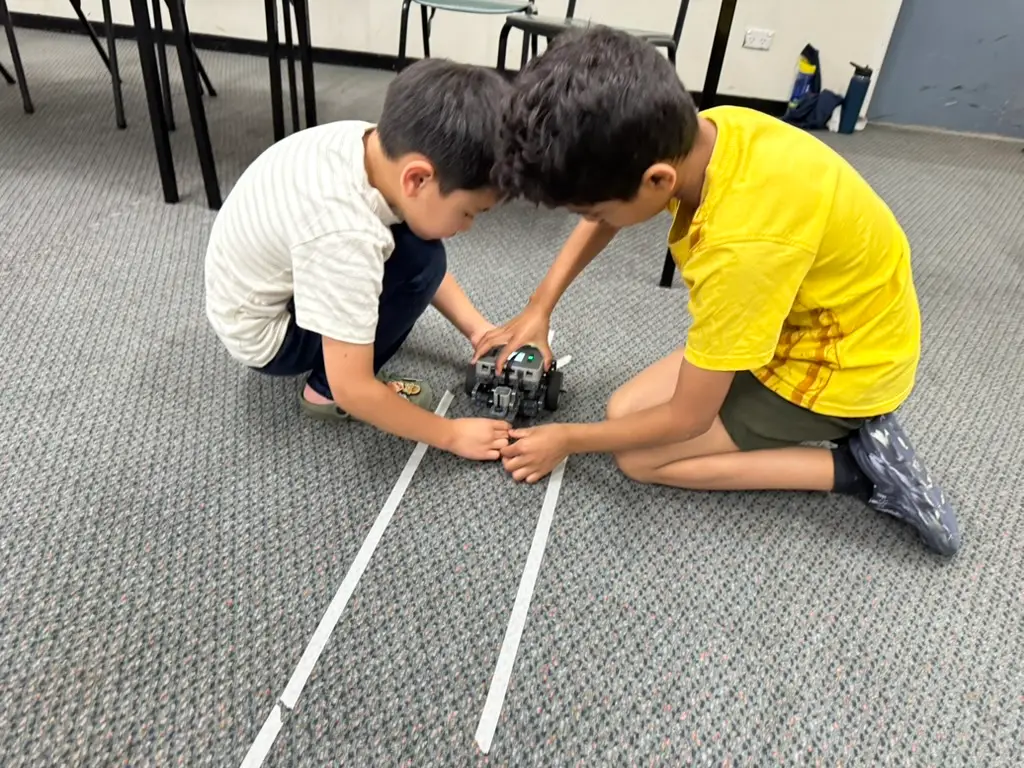
Robotics & Computer Science
Where students learn to think like engineers — design, build, program, test and improve real robotic systems through structured term projects.
Years 2–8 term classes, with advanced coaching and mentoring for Years 9–12.
Explore programDraft review notes
Tell us what your learner is curious about and we’ll help identify an appropriate next step.