Coaching-led learning
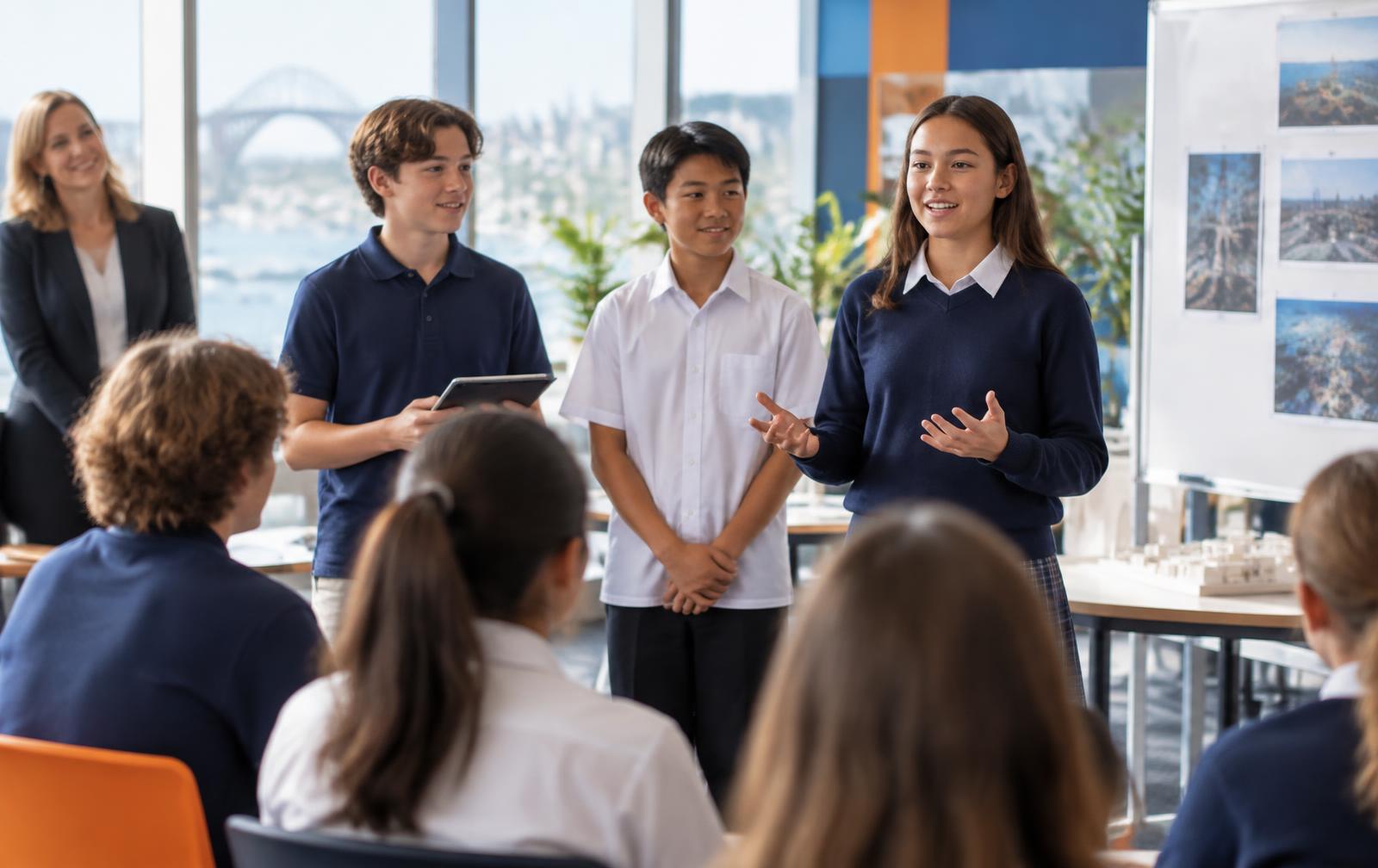
Questions, feedback and encouragement help students develop their own voice.
Communication & Leadership
Every story has a voice. Discover yours. Connect with an audience through vivid, purposeful stories.
Programme description
Storytelling helps students discover how to communicate experiences, ideas and imagination through engaging narratives. Students explore what makes a story meaningful: relatable characters, a clear setting, interesting events, a challenge and a satisfying resolution. Through story circles, improvisation, creative writing, oral storytelling and guided presentation, students practise turning ideas into stories that others can understand and enjoy.
The program develops students' ability to organise thoughts, choose descriptive language, use expression and understand different perspectives. Educators encourage students to draw on their interests, imagination or age-appropriate personal experiences while respecting individual privacy and personal boundaries. Students do not need previous public-speaking or creative-writing experience. Activities can be adapted for different ages and language-development levels.
What students will learn
The Forge difference
A practical, supportive approach built around participation, thoughtful guidance and progressive challenge.
Questions, feedback and encouragement help students develop their own voice.
Progressive challenges allow students to participate at an appropriate pace.
Interactive practice, collaboration and speaking activities.
Activities are adapted to students' age, interests and experience.
Regular practice, feedback and reflection build on previous learning.
Students practise skills relevant to school and everyday communication.
Curriculum
Each area is developed through guided explanation, practical work, testing and reflection.
Developing characters, settings and events.
Understanding beginnings, problems, turning points and endings.
Using descriptive language, sensory detail and dialogue.
Creating suspense, curiosity and emotional connection.
Using voice, movement and expression to tell a story.
Revising narratives through listening and feedback.
Proposed eight-session curriculum
This introductory term sequence is proposed and pending founder curriculum approval.
Students explore different stories and generate their own ideas.
Students create characters and develop story settings.
Students practise organising a narrative.
Students develop problems and events that move a story forward.
Students use language to make stories more engaging.
Students practise communicating stories orally.
Students refine their narratives through feedback and practice.
Students share their stories and reflect on their development.
Student project
Students create an original narrative or adapt an approved story idea. They share their story through an oral performance, supported by optional drawings, props or digital illustrations.
Core skills and outcomes
Proposed Growth & Care approach
Guided questioning and respectful feedback can support creative expression while maintaining privacy and appropriate personal boundaries.
The exact coaching, mentoring and pastoral-care practices included are confirmed for each program. An individually assigned mentor is not promised.
Explore our learning approachForge Learning App
Forge Learning App access and course resources are confirmed for each approved intake. No new platform, student video recording or AI speech analysis is included in this website update.
Suggested learning pathway
Students can begin at an appropriate level based on age, interests and previous experience. This is guidance—not a mandatory prerequisite chain.
Where included in an approved intake, Forge may support story development, practice reflections, student projects, educator feedback. These features are potential course supports until access is confirmed; video recording and AI speech analysis are not included.
No Storytelling session is currently confirmed. Register your interest for approved dates, locations and delivery details.
View proposed Term 1 catalogueFees, available places and enrolment arrangements have not been approved. Register your interest to receive confirmed information.
Register Your InterestFrequently asked
Years 2–8. Guidance is matched to learner age and experience. Beginner to developing. Educators can help families identify an appropriate entry point.
Speaking challenges are intended to be progressive and appropriate to the learner. Preparation, choice, constructive feedback and reflection are emphasised; no particular confidence outcome is guaranteed.
The proposed program combines explanation, active speaking or listening practice, collaboration, feedback and reflection. The exact activity is adapted to age and experience.
My Original Story: Students create an original narrative or adapt an approved story idea. They share their story through an oral performance, supported by optional drawings, props or digital illustrations.
No date, time, venue, capacity or commencement date is confirmed on this page. Register your interest to receive approved details.
Use the Register Your Interest action to contact the academy. Enrolment and payment are not activated until an approved process and session are available.
Related courses
These are suggested routes, not mandatory prerequisites. Existing experience can support a different entry point.
Communication & Leadership
Learn structure, voice and presence in a supportive environment.
Years 3–8. Guidance is matched to learner age and experience. Beginner to developing.
Explore programCommunication & Leadership
Shape memorable speeches through language, delivery and practice.
Years 5–12. Guidance is matched to learner age and experience. Developing to advanced.
Explore programCommunication & Leadership
Plan and deliver clear, engaging presentations.
Years 5–12. Guidance is matched to learner age and experience. Beginner to advanced.
Explore programDraft review notes
Tell us what your learner is curious about and we’ll help identify an appropriate next step.