Chadstone — In person
Forge Innovation Camp
A holistic five-day experience with physical, robotic and digital solution options.
11–15 January 2027
You’re viewing this option
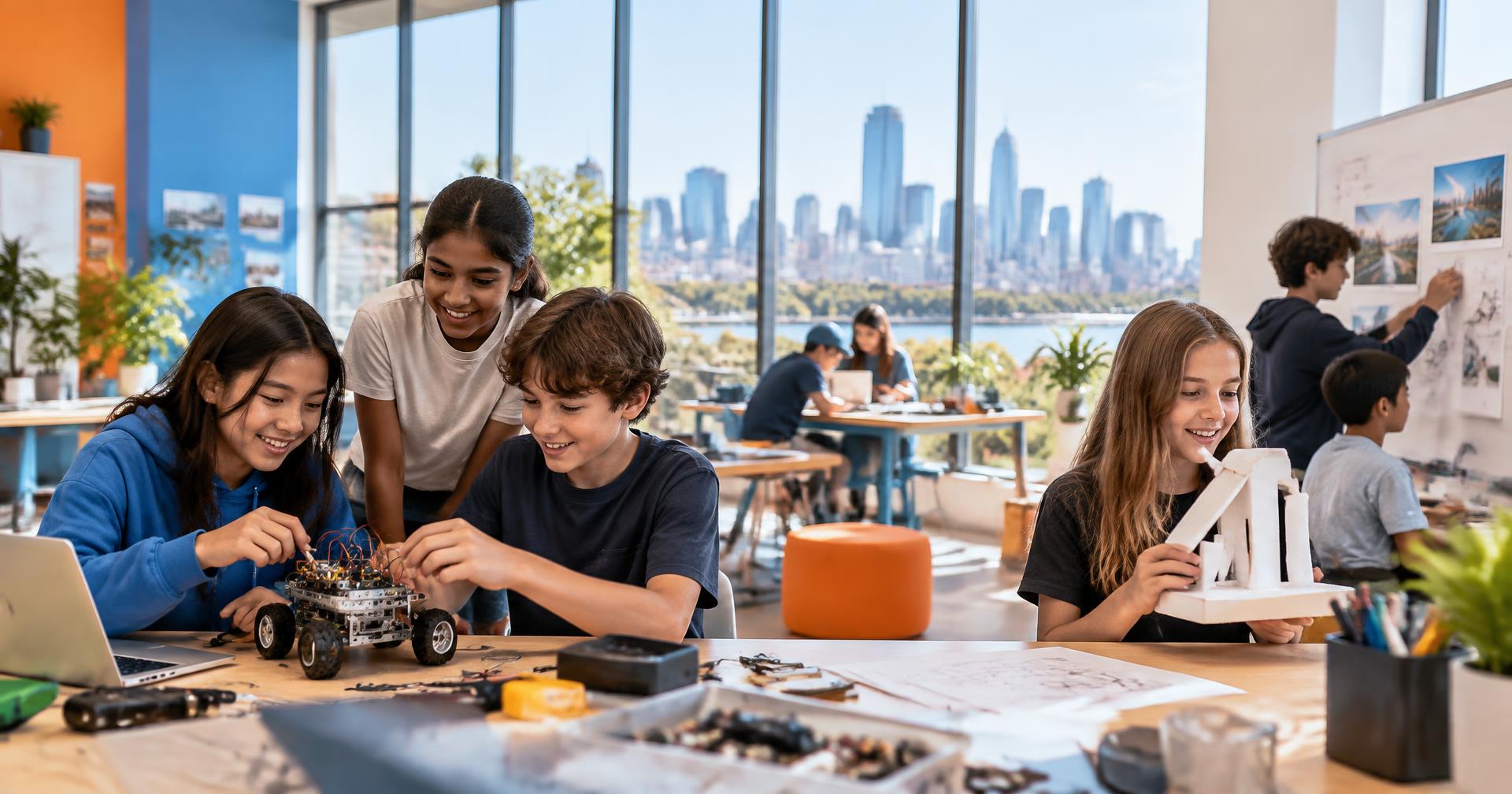
Forge Innovation Camp · Discover. Create. Lead.
Discover a meaningful challenge, collaborate with a team, create and test a solution, explore entrepreneurship and present your ideas.
Australia · Three ways to take part
Choose the broader in-person Chadstone camp or a digital-focused live online or self-paced challenge.
Chadstone — In person
A holistic five-day experience with physical, robotic and digital solution options.
11–15 January 2027
Live online — Digital
Facilitated Zoom collaboration supported by approved Forge learning activities.
Proposed 18–22 January 2027
Self-paced — Digital
Five primarily individual missions through Forge with a defined support package.
Access dates to be confirmed
One connected five-day experience
Students discover a challenge, collaborate, create, innovate and present. Robotics and AI are meaningful supporting tools within a much broader educational journey.
At Innovate Forge Academy, our Summer Innovation Camp brings together design thinking, leadership, technology, entrepreneurship and communication in one connected five-day learning experience.
Students begin by exploring a meaningful challenge and understanding the people it affects. They develop ideas, practise teamwork and communication, create a prototype or demonstration, and explore how their solution might create value.
Along the way, students may use robotics, coding and supervised AI activities as tools for making, testing and improving ideas.
The camp concludes with a Forge Challenge Showcase, where teams share their solutions, explain what they learned and reflect on their contributions.
Our coaching-led approach encourages curiosity, independent thinking, collaboration, responsible decision-making and purposeful communication. The programme is designed to create opportunities for students with different interests and strengths to contribute.
These are intended learning opportunities. Individual improvements in confidence, leadership or entrepreneurial success are not guaranteed.
The Forge Innovation Challenge
Teams choose from a small number of facilitator-approved, age-appropriate scenarios, then follow one inquiry from understanding people to testing and communicating a response.
Who?
Who might benefit?
What?
What problem or need are we addressing?
Why?
Why does it matter?
How?
What solution could we create?
Test
How can we learn whether our idea works?
Value
What useful benefit could it offer?
Communicate
How can we explain our idea clearly?
Every team does not have to build the same robot or launch a real business. Challenge options are matched to confirmed staffing, equipment and student experience.
Five-day learning journey
Each day builds on the work before it. The programme is designed as a connected five-day experience, not five unrelated introductory workshops.
Day 1 · MON · 11 JAN
Explore a real-world challenge and shape a thoughtful response.
Educational focus: Design thinking, observation, empathy, creative problem-solving and idea generation.
Students
Student output
Educators use guided questions, observation, discussion, simple user scenarios and age-appropriate design-thinking activities.
Day 2 · TUE · 12 JAN
Build confidence, collaborate and communicate ideas with purpose.
Educational focus: Communication, public speaking, teamwork, leadership, listening and collaboration.
Students
Student output
Leadership is not limited to being outspoken. Students can contribute through different strengths and communication styles.
Day 3 · WED · 13 JAN
Code, build and test a technology-powered creation.
Educational focus: Technology, prototyping, coding, robotics, AI literacy and iterative experimentation.
Students
Student output
Robotics may be a project option and/or a shared guided experience; it does not make every final concept a robot. Hardware, compatible sensors and any optional AI Vision Sensor demonstration depend on confirmed equipment and preparation.
Day 4 · THU · 14 JAN
Turn an idea into a solution with an audience and story.
Educational focus: Innovation, entrepreneurial thinking, enterprise building, value creation and feasibility.
Students
Student output
This is an educational venture simulation. Enterprise may create social, community, educational or economic value; students do not register businesses, collect payments, enter agreements or make real financial commitments.
Day 5 · FRI · 15 JAN
Bring the week together and share the journey.
Educational focus: Integration, demonstration, public speaking, presentation, teamwork and reflection.
Students
Student output
Parents or guests may attend only if showcase attendance and supervision arrangements are confirmed.
What will my child create and learn?
By the end of the week, each team will have worked towards an original solution concept, a prototype or demonstration, and a presentation explaining their idea and learning journey. Each student will also complete an individual reflection on their contribution, new skills and next steps.
A fully functioning product, successful business or commercial invention is not guaranteed. A partially working prototype with clear reasoning, testing and reflection remains a meaningful educational outcome.
Forge Challenge Portfolio
Intended learning opportunities
The camp creates practical opportunities across nine disciplines. These are learning intentions, not guaranteed developmental outcomes.
Understand a user need and define a challenge.
Generate, explore and improve original ideas.
Use appropriate technology to prototype, programme or demonstrate a solution.
Practise responsible prompting and verify AI-generated suggestions.
Collaborate and contribute to a shared project.
Practise initiative, responsibility and consideration for others.
Explore audiences, value and practical enterprise concepts.
Explain ideas clearly and deliver an age-appropriate presentation.
Describe personal contributions, challenges and next steps.
Day 3 supporting tools
VEX IQ robotics, coding and supervised AI activities support making, testing and improving ideas. They do not define the whole camp or require every final solution to be a robot.
Approved VEX IQ kits may support building, movement programming, compatible sensor work, testing and troubleshooting. Only confirmed equipment and sensors will be used; no individual kit or device is promised.
Students develop their own ideas first, then learn to state context, goal, constraints and a question before checking suggestions against observations or reliable evidence.
Forge is not presented as directly controlling VEX IQ robots, and ordinary sensor programming is not described as AI. Any compatible AI Vision Sensor demonstration depends on confirmed hardware, preparation and teaching approval.
Coaching, mentoring and support
The camp connects to the proposed Forge Growth & Care Framework through supportive educational relationships and clear professional boundaries.
Educators guide students through questions, feedback, reflection and practical challenges.
Educators encourage students to explore strengths, interests and future possibilities.
The learning environment is designed to be inclusive, respectful and child-safe.
The camp does not promise an individual mentor, clinical counselling or guaranteed confidence gains. Safeguarding, consent and supervision requirements apply.
Different starting points
The same challenge can provide more structure for beginners and greater independence for experienced learners. Confirmed age bands and cohort groupings will be communicated through the enrolment process.
Practical information
Five-day in-person experience, 11–15 January 2027, at our chadstone centre (waterman business centre – chadstone shopping centre). $297 per day.
The following details are not stated as confirmed on this page. Families should rely on the current enrolment information or contact the Academy before making plans.
Friday team pitch
Parent FAQs
Answers reflect the published camp details and clearly identify arrangements that still need confirmation.
No. It is one connected innovation experience spanning design thinking, teamwork, leadership, communication, technology, enterprise and reflection. Robotics, coding and supervised AI may support the work, especially on Day 3.
No. Teams may create a model robot, coded prototype, digital concept, physical invention, educational resource, service or community initiative. The solution type must suit the approved challenge and available resources.
Each team works towards an original solution concept, a prototype or demonstration and a presentation. Each student also completes an individual reflection and contributes to a Forge Challenge Portfolio.
No confirmed prerequisite is published. Activities can provide greater structure for beginners and added complexity for experienced learners, subject to the approved cohort and delivery plan.
Students first develop their own ideas, then may practise context, goal, constraints, question and verification through an approved Forge learning environment or educator-led demonstration. No unapproved service account is required.
The programme is designed as one connected five-day experience. Full-week and any single-day attendance rules must be confirmed through the enrolment process; individual days are not presented here as standalone programmes.
The current approved public details are 11–15 January 2027, in person at our Chadstone centre (Waterman Business Centre – Chadstone Shopping Centre), at $297 per day. Enrolment is open through the linked booking page.
Parent or guest attendance is not currently promised. Any attendance, consent and supervision arrangements will be communicated if approved.
Five connected days of discovery, design, teamwork, technology, enterprise and presentation — 11–15 January 2027 at Chadstone, $297 per day.