Coaching-led learning
Individual guidance helps young writers discover and develop their own creative voice.
Educators use questions, encouragement and feedback rather than writing students' work for them.

Creative Writing & Storytelling
From first idea to finished publication. Experience the journey from first idea to finished publication.
Programme description
Writing & Publishing Projects introduces students to the process of transforming an original piece of writing into a finished publication.
Students explore the practical stages of developing, editing, designing and preparing written work for an intended audience.
Through a guided project, students learn how authors and publishers approach manuscript development, editorial feedback, proofreading, layout and final presentation.
They consider how format, design, illustrations and audience influence the reading experience.
The programme introduces age-appropriate concepts relating to copyright, attribution, responsible use of AI, privacy and author ownership.
Students may work individually or collaboratively on an approved publication project, such as a class anthology, illustrated storybook, poetry collection, newsletter or digital publication.
Educators guide students through the process while encouraging independence, creativity and responsibility for their own work.
The programme culminates in a finished, appropriately shared publication or publication-ready project.
External distribution or commercial publishing is not guaranteed and requires separate approval.
What students will learn
The Forge difference
A supportive, coaching-led pathway where original ideas develop through practice, feedback and purposeful creative work.
Individual guidance helps young writers discover and develop their own creative voice.
Educators use questions, encouragement and feedback rather than writing students' work for them.
A welcoming space where students can explore ideas, experiment and develop confidence.
Students are encouraged to try new writing approaches without unnecessary pressure or comparison.
Creative challenges encourage students to develop their own ideas and perspectives.
The academy values originality, curiosity and personal expression.
Writing activities are adapted to each student's age, interests and experience.
Students can engage with appropriate writing challenges at different developmental stages.
Practice, feedback and revision help students strengthen their writing over time.
The pathway connects foundational writing, narrative development, independent authorship and publication projects.
Students work towards meaningful writing projects they can develop, refine and share.
Creative writing connects to school learning, communication, storytelling, personal expression and future creative interests.
Curriculum
Each area is developed through guided explanation, practical work, testing and reflection.
Understanding the writing and publishing process.
Planning a publication for an intended audience.
Developing and revising original manuscripts.
Editing, proofreading and incorporating feedback.
Exploring layout, typography and visual presentation.
Understanding authorship, copyright and responsible publication.
Proposed eight-session curriculum
This introductory term sequence is proposed and pending founder curriculum approval.
Students explore different publication formats and select an appropriate project.
Students identify their intended readers, format and publication objectives.
Students prepare or improve the written content for their publication.
Students explore constructive editing and revise their work.
Students develop the visual presentation of their publication.
Students learn age-appropriate principles of authorship, permissions, attribution and safe publication.
Students prepare a final version and review it for errors, presentation and completeness.
Students share an approved finished publication or publication-ready project. They reflect on the creative and production process.
Student project
Students create an original publication or contribute to an approved collaborative publication. Formats may include a short storybook, class anthology, illustrated digital book, poetry collection, student magazine or approved digital publication. It may be distributed privately to participating families or shared through an approved platform. Public distribution requires consent and publication review. Student names, photographs or identifiable details are not published automatically. Commercial publishing, ISBN registration, bookshop distribution and sales are not promised.
Core skills and outcomes
Proposed Growth & Care approach
Coaching can support editing decisions, appropriate mentoring can connect creative goals with responsible publication, and pastoral care protects consent, privacy, copyright and student ownership. This is educational support, not therapeutic writing or mental health treatment.
The exact coaching, mentoring and pastoral-care practices included are confirmed for each program. An individually assigned mentor is not promised.
Explore our learning approachAuthorship & publication
Enrolment does not give the academy unrestricted rights to reproduce, sell or commercially exploit student writing, and commercial publication is never guaranteed. Students are not required to disclose personal, family or emotional experiences; this is creative education, not therapeutic writing or mental health treatment.
Students retain appropriate rights to their original work. Educator feedback supports—not replaces—the student's own thinking and writing.
Age-appropriate guidance covers originality, copyright, permissions and attribution for source material, images and collaborative contributions.
Private class sharing is different from public publication. Identifiable work, names, photographs or personal details require appropriate permission.
Public sharing, competitions, commercial distribution and third-party publishing require separate review and approval where applicable.
AI tools are not promised. Any future use must preserve student authorship, privacy, independent thinking and age-appropriate safeguards.
Students are not required to disclose personal, family or emotional experiences; fictional and alternative prompts remain available.
Forge Learning App
Forge Learning App access and writing resources are confirmed for each approved intake. No new writing module or AI writing assistance is included in this website update. Student writing will not be used to train AI or sent to external AI services without appropriate authorisation and safeguards.
Suggested learning pathway
This is guidance, not a mandatory prerequisite chain. Students may enter at the level suited to their age, interests and experience.
Where included in an approved intake, Forge may support story planning, draft submissions, educator feedback, revision activities, writing portfolios, progress tracking. These are potential supports until implemented access is confirmed. No AI writing assistance or new writing module is included in this website update, and student work will not be sent to external AI services without appropriate authorisation and safeguards.
No Writing & Publishing Projects session is currently confirmed. Register your interest for approved dates, locations and delivery details.
View proposed Term 1 catalogueFees, available places and enrolment arrangements have not been approved. Register your interest to receive confirmed information.
Register Your InterestFrequently asked
No. Activities are adapted to age and experience, and beginners are welcome where indicated. No particular writing or confidence outcome is guaranteed.
The programme values ideas and expression alongside age-appropriate development of clarity, spelling and grammar. Support is matched to the learner without writing their work for them.
Developing to advanced writers. Educators can help families choose a suitable starting point, and activities are adapted to age and previous experience.
Grouping arrangements are confirmed for each approved intake. The published age guidance is provisional, and educators consider age, interests, literacy development and previous writing experience.
No. The pathway is suggested rather than mandatory. Educators can help families identify an appropriate entry point based on age, interests and experience.
My First Publication: Students create an original publication or contribute to an approved collaborative publication. Formats may include a short storybook, class anthology, illustrated digital book, poetry collection, student magazine or approved digital publication. It may be distributed privately to participating families or shared through an approved platform. Public distribution requires consent and publication review. Student names, photographs or identifiable details are not published automatically. Commercial publishing, ISBN registration, bookshop distribution and sales are not promised.
Educators use questions, encouragement and constructive feedback to support original ideas, purposeful revision and growing independence.
The proposed curriculum includes appropriate class sharing or private showcase opportunities. Participation and format depend on the learner, approved arrangements and relevant consent.
Not automatically. Public sharing, external competitions, commercial distribution and third-party publication require separate review and appropriate parent or guardian consent.
Students retain appropriate rights to their original work. Enrolment does not grant the academy unrestricted rights to reproduce, sell or commercially exploit it.
AI writing tools are not promised. Any future use must support student authorship and independent thinking, with appropriate privacy, age and authorisation safeguards.
Separately approved Independent Writing Projects, Advanced Author Mentoring, Creative Entrepreneurship or Digital Product Development. This is a suggested progression rather than a mandatory prerequisite, and educators can discuss an appropriate next step.
No date, time, venue, trainer, capacity or commencement date is confirmed on this page. Register your interest to receive approved details.
Related courses
These are suggested routes, not mandatory prerequisites. Existing experience can support a different entry point.
Creative Writing & Storytelling
Develop, refine and share an original piece of writing.
Years 5–12. Guidance is matched to learner age and experience. Developing writers.
Explore program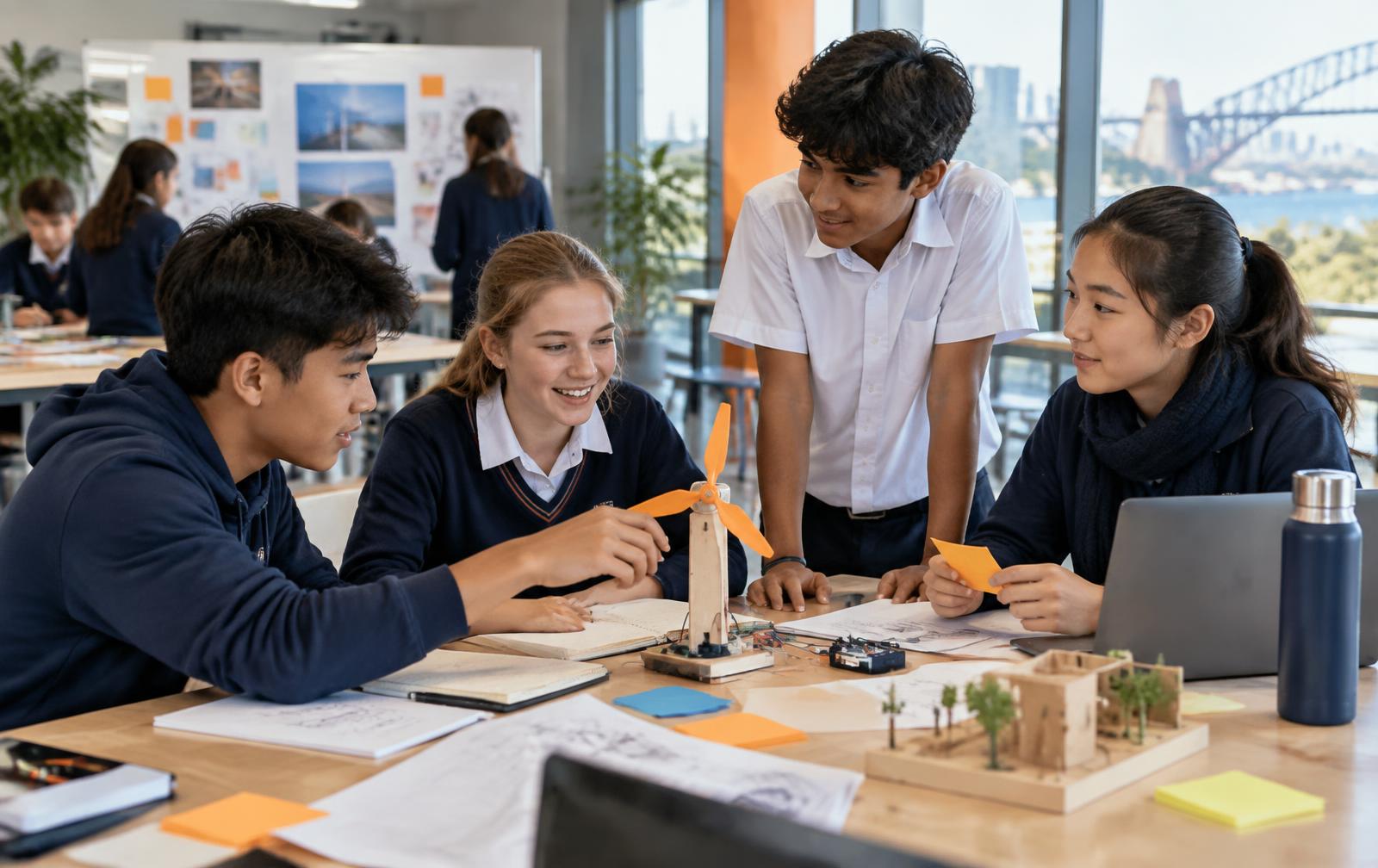
Innovation, Leadership & Entrepreneurship
Explore how ideas become useful, sustainable ventures.
Years 6–10. The suggested year range is provisional and requires curriculum approval. Beginners welcome. Guidance is matched to learner age and experience.
Explore program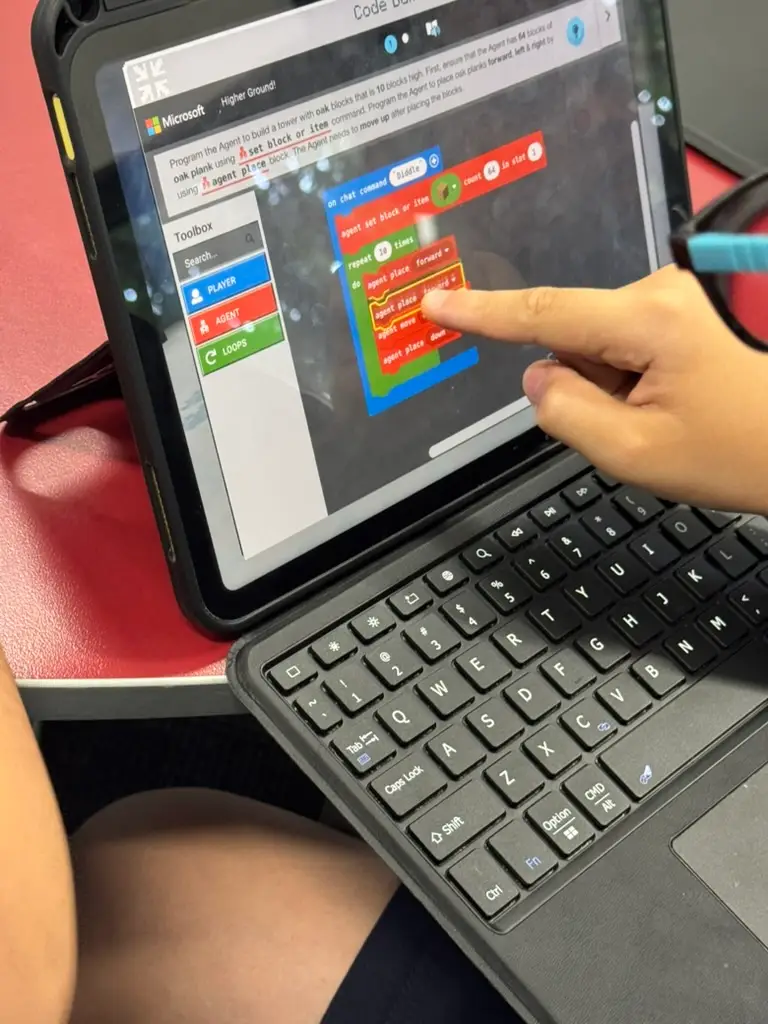
Robotics & Computer Science
Build games and learn how digital systems work — coding, game mechanics and structured Minecraft Education challenges.
Years 2–8 · Instructor-led in person · Max 8 students per instructor
Explore programDraft review notes
Tell us what your learner is curious about and we’ll help identify an appropriate next step.